
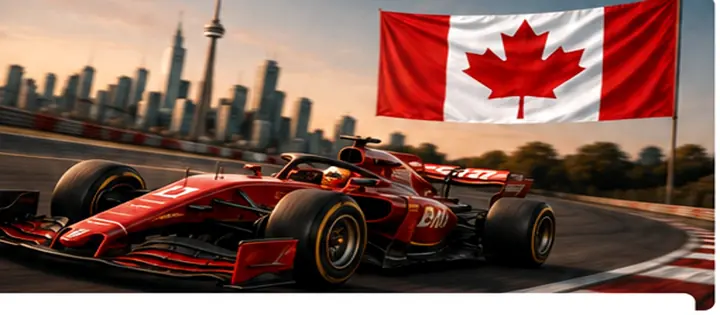
Formula 1 is a global championship, but Canadian bettors have a genuine local connection through the Montreal Grand Prix and Canadian driver Lance Stroll. The key to betting it well is understanding that the race result is produced by a system: driver, car, tyres, strategy, circuit, weather and reliability all interact. This guide breaks that system into betting decisions you can actually use.
Is F1 Betting Legal in Canada?
Formula 1 betting is legal in Canada when the wager is placed through a betting option that is authorized in the player's province or territory. The federal change that took effect on August 27, 2021 allowed provinces and territories to conduct and manage single-event sports betting. That change made it possible to bet on one Formula 1 race, one qualifying session or one specific driver market instead of relying on old parlay-only structures.
The practical rules still depend on where you live. Ontario uses a competitive market with registered private operators. Alberta also has a regulated competitive model in 2026. Other provinces rely on government or regional lottery platforms such as PlayNow, Espacejeux or Atlantic Lottery products. The safest approach is simple: confirm the regulated option in your province before depositing, and do not assume that a website serving another province is automatically authorized where you live.
What Is F1 Betting?
F1 betting means wagering on the result of Formula 1 sessions, races or championship outcomes. The most obvious market is the Grand Prix winner, but modern sportsbooks can offer dozens of alternatives: podium finishes, top-six and points finishes, qualifying positions, pole position, fastest lap, driver head-to-heads, team matchups, retirements, safety-car markets, winning margin, fastest pit stop and season-long Drivers' or Constructors' Championship futures.
Motorsport is different from betting on a league game because the field is not divided into two sides. Twenty-two drivers can be priced in the same outright market in 2026, and their chances depend on much more than raw driving skill. Car performance, circuit fit, tyre degradation, pit strategy, weather, grid penalties, reliability and race control can all change the probability of a result.
That complexity is why the best F1 betting process is built around probabilities rather than predictions. The goal is not to guess every winner. It is to decide whether the available price is better than the chance you assign to the outcome.
Popular F1 Betting Markets
| Market | What You Are Betting | Key Variable |
|---|---|---|
| Race Winner | Driver to finish first | Car pace, grid, strategy |
| Podium | Driver to finish top 3 | Consistency and incident risk |
| Top 10 / Points | Driver to finish in points | Midfield pace and reliability |
| Pole Position | Fastest qualifying driver | One-lap speed and track evolution |
| Head-to-Head | One driver to rank ahead of another | Relative pace and retirement rules |
| Fastest Lap | Driver to set the quickest race lap | Late tyre strategy and pit window |
| Driver to Retire | Named driver not to finish | Reliability and incident probability |
| Constructors Future | Team to win season championship | Two-car scoring and development |
Formula 1 in 2026: What Canadian Bettors Should Know
The 2026 season is a major technical reset for Formula 1. New chassis and power-unit rules changed the way teams design and operate the cars, while advanced sustainable fuels and a greater electrical contribution became central parts of the package. For bettors, a regulation change this large matters because historical performance can be less predictive than usual. A team that dominated under one technical era may not begin the next era with the same advantage.
The official 2026 grid features 11 teams and 22 drivers, with Cadillac joining as the new 11th team. That expansion matters for finishing-position and retirement markets because two more cars affect traffic, qualifying elimination, midfield competition and the number of drivers fighting for the top ten.
The season also includes Sprint weekends. Formula 1's official Sprint format awards points to the top eight finishers, and six circuits were selected to host Sprints in 2026. A Sprint weekend reduces the amount of ordinary practice time before competitive running, so setup uncertainty and rapid track evolution can become more important betting variables.
The 2026 Grid: 11 Teams, 22 Drivers and a New Competitive Layer
The 2026 Formula 1 grid contains Mercedes, Ferrari, McLaren, Red Bull Racing, Racing Bulls, Alpine, Haas, Audi, Williams, Aston Martin and Cadillac. Each constructor fields two race drivers. Cadillac's arrival expands the grid to 22 cars for the first time in years, and that creates subtle betting consequences beyond the headline of an extra team.
Qualifying sessions now eliminate more cars before Q3, midfield head-to-heads have more combinations, and lower finishing-position markets can be more competitive. Sportsbooks may also post team-specific markets for a new entrant at prices that move sharply as the market learns its real pace and reliability.
Canadian bettors have an obvious home-country angle through Lance Stroll, who races for Aston Martin in 2026. National interest can affect public betting attention, especially around Montreal. That does not mean a Canadian driver should automatically be backed at home. The same value test applies: compare car pace, circuit fit, qualifying expectations, reliability and the sportsbook price before deciding whether the market is offering a fair number.
How a Formula 1 Race Weekend Works
A standard Formula 1 weekend normally builds from practice into qualifying and then the Grand Prix. Practice sessions let teams evaluate tyre behaviour, ride height, aerodynamic balance, fuel loads and long-run pace. Qualifying sets the starting grid through knockout sessions. The Grand Prix is the main race and awards the largest championship points.
For bettors, each session produces new information. Friday pace can reveal a car's baseline performance, but practice times are easy to misread because teams use different fuel loads, power modes and run plans. Qualifying offers a cleaner performance comparison, yet even that result must be interpreted alongside penalties, tyre allocation and likely race pace.
The starting grid is not always identical to qualifying order. Grid penalties can be applied for power-unit components, gearbox changes or sporting infringements. Always confirm the final official grid before placing a race-position bet that depends heavily on starting position.

Sprint Weekend Betting Explained
Sprint weekends add a shorter competitive race and their own qualifying session. In 2026, the Sprint points scale awards 8 points to the winner, then 7, 6, 5, 4, 3, 2 and 1 down to eighth place. Sprint results can affect championship futures and provide a direct data point before the Grand Prix.
The biggest handicapping difference is limited preparation time. Teams have less ordinary practice before cars enter competitive sessions, which can expose setup mistakes or reward teams that arrive with a strong simulation package. A single practice session can also make weather changes more disruptive because there is less time to collect comparable data.
Sportsbooks may offer Sprint winner, Sprint podium, Sprint points, Sprint head-to-head and Sprint qualifying markets. Do not confuse those with the Sunday Grand Prix markets. Settlement rules and session timing are separate, and a driver can perform poorly in the Sprint yet still be competitive in the Grand Prix.
How to Bet on Formula 1 Step by Step
- Confirm the regulated betting option in your province. Use the local lottery platform or an authorized sportsbook where competitive licensing exists.
- Choose the session. Decide whether your opinion applies to practice, qualifying, the Sprint, the Grand Prix or a season-long future.
- Select a market. Outrights, podiums, head-to-heads and points finishes all express different kinds of opinions.
- Convert the odds into an implied probability. Compare that percentage with your own estimate rather than focusing only on the potential payout.
- Check the final information. Confirm weather, grid penalties, starting position, tyre situation and any late mechanical news.
- Set the stake before the event. Use a consistent bankroll method and do not change the stake because the previous bet lost.
- Record the result and closing price. A betting log helps separate good analysis from short-term luck.
That process is intentionally simple. F1 offers enough technical information to overwhelm a bettor, so a repeatable checklist is more valuable than trying to react to every rumour in the paddock.
F1 Odds, Implied Probability and Sportsbook Margin
Canadian sportsbooks commonly display American or decimal odds, depending on platform settings. Decimal odds are especially intuitive for multi-driver outright markets because the number shows the total return for each dollar staked. A price of 3.00 represents a 33.3% implied probability before accounting for the sportsbook's margin. A price of 6.00 represents about 16.7%.
American odds can be converted the same way. Positive odds such as +200 imply roughly 33.3%. Negative odds such as -150 imply 60%. The key word is implied. Sportsbooks build margin into the full market, so the combined implied probabilities of every driver in an outright market can exceed 100%.
A disciplined bettor should compare prices across regulated books where multiple options are available. Moving from +180 to +210 on the same driver does not make the driver more likely to win, but it materially improves the return if your analysis is right.
Race Winner Betting
The race winner market is the classic Formula 1 outright. You select the driver who will be classified first in the Grand Prix. It is easy to understand but difficult to price because the outcome depends on car performance, starting position, strategy, reliability and race incidents.
Favorites are often drivers from the quickest teams, but short prices can become unattractive if the market already reflects that advantage. At circuits where overtaking is difficult, qualifying position may deserve extra weight. At tracks with multiple strategy options, tyre degradation and pit-window flexibility can be more important.
Before betting a race winner, ask three questions: Can the car realistically lead on pure pace? Can the driver start close enough to the front to control strategy? Is the price high enough to compensate for the normal mechanical and incident risk in motorsport? If one of those answers is weak, a podium or head-to-head market may express the same opinion with less variance.
Podium, Top 6 and Points Finish Markets
Finishing-position markets let you bet on a driver without requiring an outright victory. A podium bet usually requires a top-three finish. Top-6 and top-10 markets give the driver more ways to cash, but the price becomes shorter as the threshold widens.
These markets can be useful for midfield drivers who rarely win but consistently capitalize on strong race pace, clean strategy and reliability. A top-10 bet can also be attractive when a driver qualifies lower than expected because of traffic or a minor qualifying issue but still has a car capable of moving forward.
Settlement details matter. Some sportsbooks use official FIA classification, while others define position using the final published result after penalties. A driver who crosses the line eighth can be classified tenth after a penalty, or move forward after another competitor is penalized. Read the rules before betting a market where one position can decide the outcome.
Qualifying and Pole Position Betting
Qualifying markets isolate one-lap speed. Sportsbooks can offer pole position, top-three qualifying, Q3 qualification, team qualifying winner and driver head-to-heads. These markets remove race strategy from the equation but increase the importance of track evolution, tyre warm-up, traffic and the timing of a final lap.
Street circuits and short laps can create congestion problems, while weather can make the last car across the line much faster or slower than earlier runners. A driver with excellent long-run pace can still be a poor qualifying bet if the car struggles to switch the tyres on quickly.
Qualifying also deserves special attention on circuits where passing is limited. If track position is unusually valuable, a strong qualifying package can influence both Saturday and Sunday markets. Bettors should avoid assuming that the fastest practice lap automatically predicts pole because practice programs differ widely.

F1 Head-to-Head and Matchup Betting
Head-to-head markets compare two drivers or teams and ask which will finish ahead. These are among the most useful F1 markets because you do not need to predict the entire finishing order. You only need to decide whether the sportsbook has priced the relative matchup correctly.
Teammate matchups are especially informative because both drivers usually have comparable equipment. Differences in driving style, qualifying consistency, tyre management and reliability can still matter, but the car-performance variable is reduced. Cross-team matchups add more uncertainty because the relative pace of the cars can change from circuit to circuit.
Read the retirement rules carefully. Some operators grade the driver who completes more laps as the winner if both retire. Others require classification or apply specific dead-heat rules. A good handicap can be ruined by misunderstanding how a DNF is treated.
Fastest Lap Betting
Fastest lap markets are attractive because they can produce larger prices than race-winner betting, but they are highly strategic. The fastest lap often comes from a driver who has a gap large enough to make a late pit stop for fresh tyres, not necessarily from the driver with the quickest race pace overall.
Fresh soft tyres, low fuel and clean air can create ideal conditions late in the Grand Prix. A driver outside the fight for position may also have more freedom to chase a quick lap. Safety cars can change the available pit window and destroy a pre-race fastest-lap thesis in seconds.
Instead of betting purely on the quickest car, consider who is likely to have strategic freedom near the end of the race. Team priorities also matter: a constructor fighting for championship points may not risk an unnecessary pit stop simply to chase fastest lap.
DNF, Retirement and Classified Finish Markets
Formula 1 is a mechanical sport, so retirement markets are a natural part of the betting menu. You may see driver to retire, driver to be classified, number of classified finishers or over/under retirement markets.
Reliability is not constant. New technical regulations, extreme heat, kerb-heavy circuits and power-unit component mileage can all change failure risk. The 2026 technical reset makes early-season historical reliability especially difficult to interpret because teams are learning new machinery.
Incidents also matter. Street circuits with narrow walls can increase contact risk, while wet races can produce more spins and safety-car restarts. Still, bettors should be careful not to overreact to a recent DNF. One unusual crash does not automatically make a driver likely to retire again. Separate repeatable reliability issues from random incidents.
Safety Car and Red Flag Betting
Some sportsbooks offer whether a safety car will appear, number of safety-car periods or whether the race will be red-flagged. These markets are driven by circuit design, weather, field size and incident history, but historical averages can mislead if used without context.
A narrow street circuit with limited recovery space can turn a stopped car into a safety-car deployment. A permanent circuit with large run-off areas may allow local yellow flags or a virtual safety car instead. Heavy rain can create red-flag risk even if the circuit usually produces clean races.
The distinction between a physical safety car and a virtual safety car is important because sportsbooks may settle them differently. Check the market wording. If the bet specifically says Safety Car, a Virtual Safety Car may not qualify.
Winning Margin, Number of Finishers and Other Race Props
F1 betting menus can include winning margin, number of classified finishers, lead changes, fastest pit stop, number of pit stops, whether every car completes lap one, or whether a named team gets both cars into the points. These props can be fun, but they often carry larger sportsbook margins than major markets.
Prop betting works best when you can connect the wager to a specific race mechanism. A high-degradation circuit may support more pit stops. A track with easy overtaking may create less value in a narrow winning-margin prediction because strategy can open large gaps. A street race with walls close to the racing line may increase the chance of retirements.
Avoid betting novelty props simply because they are available. The more obscure the market, the more important it is to understand settlement rules and compare the price with a realistic probability estimate.
Constructor and Team Betting Markets
Team markets let you bet on both cars collectively. Sportsbooks may offer winning constructor, both cars to score points, highest-scoring team, team head-to-heads and season-long Constructors' Championship futures.
Constructor betting requires a different mindset from driver betting. A team with one superstar and one inconsistent second driver can be weaker in the Constructors' Championship than in the Drivers' Championship. Reliability across both cars matters, as does how often both drivers qualify near the front and avoid contact.
The addition of Cadillac in 2026 creates an extra team in lower-field and season points markets. New teams can be difficult to price because reliability, pit-stop execution and development rate may change quickly during the season. Do not rely only on preseason expectations once real race data becomes available.
Drivers and Constructors Championship Futures
Futures are bets that remain open for weeks or months. The two major F1 futures are the Drivers' Championship and Constructors' Championship, although sportsbooks may also offer season points, most wins, most poles or highest-finishing driver within a team.
The price of a championship future changes after nearly every race. A good futures bettor evaluates not only current points but also car development, reliability, remaining circuit types and the likelihood that upgrades will improve performance. Sprint points create additional scoring opportunities at selected weekends.
Futures also tie up bankroll. A $100 wager placed in March may not settle until December. That opportunity cost matters. A small advantage at a very long horizon may be less attractive than repeatedly finding value in individual races where your money is not locked for months.
How to Use Practice Data Without Overreacting
Practice sessions are useful but noisy. The timing screen shows lap times, yet it does not reveal exact fuel load, power mode or setup objective. One team may run a low-fuel qualifying simulation while another focuses on long runs with more fuel.
Instead of ranking cars only by fastest lap, look for repeated patterns. Long-run consistency, tyre degradation and sector performance can tell a more useful story than one headline time. Speed traps can reveal straight-line strength, while sector splits can show where a car gains time.
Track evolution is another trap. A lap set late in the session may benefit from more rubber and a cleaner surface. Compare drivers who completed similar run plans at similar times when possible. Practice should update your prior view, not replace it with a brand-new conclusion after one fast lap.
Grid Penalties, Parc Ferme and the Official Starting Order
Formula 1 qualifying results are not always the final starting grid. Power-unit component changes, gearbox penalties, sporting infringements or post-qualifying technical decisions can move a driver backward or force a pit-lane start.
That is critical for betting. A race winner price posted immediately after qualifying may assume the qualifying order, then move when a penalty becomes official. Some markets stay open during the adjustment, while others are suspended and reposted.
Always check the official grid rather than relying on a social-media graphic or the raw qualifying result. For Canadian bettors watching the Montreal weekend, this is especially important because the Circuit Gilles Villeneuve rewards straight-line position but can also create strategic overtaking opportunities, meaning a grid penalty changes the handicap without automatically destroying it.
Tyre Compounds, Degradation and F1 Betting
Tyres are one of the strongest strategic variables in Formula 1. Teams manage different compounds, temperatures, wear rates and pit windows. A car that is slightly slower over one lap may be better over a long run if it keeps the tyres alive.
High degradation can create multiple-stop races and more opportunities for undercuts or offsets. Low degradation can reward track position and make overtaking harder because pit strategy offers fewer alternatives. Weather changes add intermediate and wet tyres to the equation.
Bettors should pay attention to long-run practice data, tyre allocation and comments about overheating or graining, but avoid assuming every race will follow the obvious strategy. Safety cars can collapse gaps and convert a bad strategy into a free pit stop. The goal is to identify which drivers have more strategic flexibility, not to predict every stop lap exactly.
Weather, Track Temperature and Wind
Weather can reshape Formula 1 faster than almost any other sport. Rain changes grip, tyre choice, visibility and incident probability. Track temperature affects tyre warm-up and degradation. Wind can destabilize cars in high-speed corners and make braking zones harder to judge.
The betting market reacts quickly to forecasts, but forecasts are not certainty. A 60% chance of rain is not the same as rain at the circuit during qualifying. Localized storms can miss the track entirely. Bettors should distinguish between a broad weather app and track-specific radar or official session reports.
Wet conditions can increase variance and reduce the advantage of a dominant dry-weather car, but they can also magnify driver skill and car-balance differences. Do not automatically back longshots because rain is expected. Re-price the race based on who has historically handled changing conditions, how the car behaves on intermediate tyres and whether the circuit allows safe overtaking.
Pit Stops, Undercuts, Overcuts and Strategy Betting
A Formula 1 pit stop changes tyre performance at the cost of time in the pit lane. The undercut means stopping earlier to use fresh tyres and gain time before a rival pits. The overcut means staying out longer in the hope that clean air, tyre life or traffic works in your favor.
Track position determines whether these tactics are powerful. At circuits where passing is difficult, an undercut can be a major weapon. At tracks with easy overtaking, a driver may accept temporary track loss to gain a better tyre advantage later.
For live betting, pit windows can create misleading prices. A driver who appears to drop ten places after stopping may still be in the strongest strategic position once rivals complete their stops. Compare the net race position, tyre age and traffic rather than reacting to the raw timing tower.
How Circuit Type Changes an F1 Bet
Formula 1 circuits demand different strengths. High-downforce tracks reward cornering and mechanical grip. Power-sensitive circuits reward straight-line efficiency. Street circuits can punish small mistakes because walls replace wide run-off areas. Some tracks are gentle on tyres, while others create heavy degradation.
This means there is no universal car ranking that applies equally every weekend. A team that looks dominant on one circuit can lose its advantage when the balance shifts toward slow corners, kerb riding or straight-line speed.
A useful betting model groups circuits by characteristics rather than country. Compare low-speed corner performance, medium-speed direction changes, high-speed aero load, braking demand, traction zones and overtaking difficulty. Then ask whether the market price has adjusted enough for that specific track profile.
Canadian Grand Prix Betting Guide: Montreal
The Canadian Grand Prix gives this guide its strongest local angle. Circuit Gilles Villeneuve in Montreal is 4.361 km long, features 14 turns and traditionally runs over 70 laps for a race distance of about 305.27 km. The circuit combines long straights, heavy braking zones, chicanes and the famous final-wall complex, making straight-line speed, braking confidence and kerb handling important.
The 2026 Canadian Grand Prix ran May 22-24 and used the Sprint format, so bettors had competitive action on Friday and Saturday before Sunday's Grand Prix. Canada is scheduled to remain on the Formula 1 calendar through 2035 under the current extension, which makes Montreal a continuing focal point for Canadian F1 betting.
Home interest can make Canadian markets feel more emotional than ordinary weekends. Keep the same process. Compare prices, verify the Sprint or Grand Prix session, watch for penalties, and do not increase your stake simply because the race is in Canada.

Canadian Grand Prix Quick Profile
| Item | 2026 / Current Detail | Betting Relevance |
|---|---|---|
| Location | Circuit Gilles Villeneuve, Montreal | Home-country focus for Canadian bettors |
| Length | 4.361 km | Short lap means tight qualifying margins |
| Turns | 14 | Heavy braking and chicanes matter |
| Traditional Race Laps | 70 | Long strategic race with pit and safety-car variance |
| 2026 Weekend | May 22-24, Sprint format | Extra competitive session and reduced practice |
| Canadian Driver | Lance Stroll | Extra local market attention does not guarantee value |
Lance Stroll and the Canadian Driver Angle
Lance Stroll is Canada's current Formula 1 driver and races for Aston Martin in 2026. That naturally creates extra attention from Canadian fans, especially during the Montreal weekend. Sportsbooks can respond with more Stroll props, head-to-heads and finishing-position markets than they might offer for a lower-profile driver on another weekend.
National support does not create betting value by itself. A strong handicap still starts with the Aston Martin car, Stroll's qualifying position, teammate comparison, tyre performance and expected race strategy. Home-race pressure and familiarity are interesting context, not a substitute for price analysis.
This is a useful general lesson for all sports betting: popularity can change demand. If public money pushes a Canadian driver's price lower than your fair estimate, the emotionally appealing side may actually become the worse bet.
The 2026 Technical Reset: Why New Cars Matter to Bettors
The 2026 regulation cycle introduced major changes to Formula 1's chassis and power units, including a larger electrical contribution and new aerodynamic concepts. The practical betting lesson is not to become an engineer overnight. It is to understand that historical data needs a different weight when the machinery changes significantly.
Early in a new regulation era, reliability can be less predictable and performance gaps can move rapidly as teams understand the package. Simulator correlation, upgrade effectiveness and operational execution may matter more than last year's championship order.
As the season develops, the market learns. Long-run pace, qualifying trends and reliability samples become more useful than preseason narratives. Bettors should update quickly but avoid overfitting one track, because a car that excels at one circuit type can still struggle at another.
Live F1 Betting and In-Play Strategy
Live F1 markets can move after every major event: the start, a pit stop, a safety car, rain, a penalty or a mechanical problem. This creates opportunities, but it also increases the risk of making a rushed decision with incomplete information.
The timing screen can be deceptive around pit cycles. A driver who has not stopped may appear to lead while owing a costly pit stop. Another driver may be temporarily far behind but effectively ahead on net strategy. Before betting live, track tyre age, number of stops, gaps, traffic and likely pit loss.
Do not chase after a bad pre-race bet by adding live wagers. Treat each live market as a new decision. If the price is not better than your updated probability, there is no reason to bet simply because the race is exciting.
F1 Parlays, Bet Builders and Correlated Outcomes
Some sportsbooks allow multiple F1 selections to be combined, either in a traditional parlay or a same-event bet builder. For example, you might combine a driver to finish on the podium with a teammate to score points. The payout rises because every leg must be correct.
Correlation matters. A driver to win and the same driver to finish on the podium are not independent outcomes, so sportsbooks may block that combination or adjust the price. Two drivers from the same team may also share reliability or strategy risks.
Parlays should be used intentionally. Adding a low-value leg does not become smart simply because it increases the displayed payout. Evaluate each component and understand that the sportsbook margin can compound across multiple selections.
Line Shopping for Formula 1 Markets
F1 prices can differ more than expected between sportsbooks, particularly in large outright markets with 22 drivers. One book may price a driver at +700 while another offers +850. Over time, consistently taking the better price is one of the simplest advantages a bettor can control.
Line shopping also matters for two-way head-to-heads and yes/no props. A difference between -120 and -105 may look small, but repeated across many bets it changes the break-even percentage significantly.
Only compare options you are legally allowed to use in your province. The goal is not to open accounts everywhere on the internet. It is to compare regulated choices where available and select the best legitimate price with clear settlement rules.
Closing Line Value in F1 Betting
Closing line value, often shortened to CLV, compares the odds you took with the market price near the event start. If you bet a driver at +300 and the market closes at +220, you captured a better number. That does not mean the bet will win, but it can be evidence that your process identified value before the broader market adjusted.
F1 lines can move sharply after practice, qualifying, penalties and weather updates. Track when you placed the wager and why. Over a large sample, consistently beating the closing price is more informative than judging your method only by a few dramatic race results.
CLV is not perfect because different books have different margins and rules, but it is a useful process metric when combined with accurate record keeping.
Building a Simple F1 Betting Model
An F1 betting model does not need to predict lap times to the thousandth. A useful starting model can score drivers across a few repeatable categories: car pace, qualifying performance, race pace, reliability, circuit fit, tyre management and starting position.
You can then translate those ratings into probabilities for a specific market. A head-to-head model may need only relative pace and finish probability. A race-winner model needs the full field because every driver competes for the same first-place outcome.
Keep the model transparent. If a late weather change matters, you should know which input to adjust. If a prediction changes dramatically because of one recent race, ask whether the model is overreacting. The purpose of modeling is to create disciplined estimates, not to create false precision.
F1 Betting Bonuses and Promotions in Canada
Sportsbooks may attach odds boosts, profit boosts, bet credits or event-specific offers to major Formula 1 weekends. The Canadian Grand Prix can receive extra promotional attention because of local interest.
A promotion only has value if the terms are favorable. Check minimum odds, eligible markets, expiry time, maximum stake, wagering conditions and whether returns are paid as cash or bonus funds. An attractive headline can become weak value if the conditions force you into bets you would not otherwise make.
Never increase your normal stake simply to qualify for a promotion. Treat the offer as a pricing adjustment to a bet that already fits your plan.
How to Compare F1 Sportsbooks in Canada
The best F1 sportsbook for a Canadian bettor is not necessarily the one with the largest welcome offer. Compare the depth of Formula 1 markets, price competitiveness, live betting quality, settlement rules, payment methods, withdrawal reliability, responsible gambling tools and legal status in your province.
Motorsport bettors should pay special attention to rules around dead heats, retirements, classification, qualifying changes and postponed sessions. Two books can display the same market name but settle unusual race situations differently.
Mobile performance also matters because qualifying and races often take place early in the Canadian morning depending on the venue. A clean mobile interface makes it easier to confirm the correct session and avoid accidental stakes, but convenience should never replace bankroll limits.
Common F1 Betting Mistakes
- Betting the fastest practice time without context. Fuel load and run plan can make practice rankings misleading.
- Ignoring the official grid. Penalties can change the race setup after qualifying.
- Assuming the best car wins every circuit. Track characteristics can change the competitive order.
- Confusing Sprint and Grand Prix markets. They are separate events with separate settlement.
- Overreacting to one DNF. Separate random incidents from repeatable reliability problems.
- Ignoring sportsbook rules. Classification and retirement rules can decide a head-to-head bet.
- Chasing during live betting. A safety car is not a reason to abandon bankroll discipline.
- Betting nationality instead of price. Canadian interest around Montreal should not replace a value calculation.
Official F1 and Canadian Sources Bettors Should Use
Reliable information matters because F1 markets can move on technical and sporting details. Formula1.com publishes the official calendar, session schedules, results, team and driver information, while the FIA publishes the sporting and technical regulations. The official Canadian Grand Prix pages provide circuit statistics and local schedule information.
For legality, use provincial gaming authorities and official lottery or regulated-market directories rather than affiliate claims. The federal Department of Justice provides the national background for single-event sports betting, but the provincial or territorial regulator determines the local legal options.
Official sources do not tell you what to bet. They help you verify the facts that your analysis depends on.
Formula 1 Betting Glossary
The official finishing order used by race control. A driver can be classified despite not completing every lap.
Did Not Finish. A retirement caused by mechanical failure, crash or another reason.
The first grid position for the Grand Prix, normally earned through qualifying.
Stopping before a rival to use fresh tyres and gain time before the rival pits.
Staying out longer than a rival in the hope of gaining time through clean air or tyre life.
A regulatory state that restricts setup changes after specified sessions.
A physical car that controls the field at reduced speed after an incident or unsafe conditions.
An electronically controlled reduced-speed condition without a physical safety car leading the field.
The loss of tyre performance as a stint progresses because of wear, heat and surface condition.
Disturbed aerodynamic flow behind another car that can reduce downforce and make following harder.
Responsible Formula 1 Betting
Formula 1 should be entertainment, not a way to repair finances or recover previous losses. The race calendar can create long gaps between events, and that can tempt some bettors to increase stakes because they feel each weekend is a special opportunity. The size of the event should not determine the size of a responsible stake.
Set deposit, loss and time limits before qualifying begins. Use only money you can afford to lose. Do not borrow to bet, do not chase a retirement or safety-car loss with a live wager, and take a break if betting starts affecting sleep, mood or relationships.
Our Responsible Gambling guide explains practical limit-setting tools and Canadian support resources. If you are under the legal gambling age in your province, do not bet.
Frequently Asked Questions
Single-event sports betting has been permitted under Canada's federal framework since August 27, 2021, but each province and territory decides how regulated betting is offered. Use only the sportsbook or provincial platform authorized where you live.
Race winner and head-to-head markets are usually the easiest to understand. A race winner bet asks which driver will win, while a head-to-head asks which of two named drivers will finish ahead under the sportsbook's settlement rules.
Where regulated sports betting is available in your province or territory, Formula 1 markets commonly include the Canadian Grand Prix in Montreal. Available markets can include race winner, podium, qualifying, fastest lap, head-to-heads and live betting.
DNF means Did Not Finish. Sportsbooks may offer driver to retire or driver to be classified markets, and the exact settlement depends on the operator's rules, including how classified finishers are treated.
A head-to-head compares two drivers or teams. You bet on which selection will rank ahead based on the stated session, usually qualifying or the race. Always check whether both must start and how retirements are settled.
Qualifying can strongly affect race position, clean-air access, strategy options and the probability of incidents. Its importance varies by circuit because overtaking is easier at some tracks than others.
A Sprint weekend adds Sprint Qualifying and a shorter Sprint race alongside the normal Grand Prix. The format creates extra betting markets and reduces normal practice time, which can increase uncertainty around car setup and race pace.
Rain, wind, temperature and track evolution can change tyre performance, qualifying order, pit strategy and incident risk. Weather can move markets quickly, so bettors should distinguish a forecast from confirmed track conditions.
Parlays can increase the potential payout but also increase the number of conditions that must go right. Correlated legs may be restricted, and a disciplined bettor should not use parlays simply to chase a large return.
Closing line value compares the price you took with the sportsbook market near the start of the event. Consistently getting a better price than the close can be a useful process signal, although it does not guarantee profit.
Many regulated sportsbooks offer in-play F1 markets. Prices can change after pit stops, safety cars, weather shifts and incidents, so live betting requires fast decisions and clear knowledge of settlement rules.
Use only discretionary money, set a separate bankroll, stake a small consistent fraction on each wager, record results and avoid increasing stakes because of a previous loss. F1 has fewer events than many team sports, so patience is especially important.
Bet Formula 1 with a repeatable Canadian process
Confirm the regulated option in your province, compare the price, verify the session and grid, set your stake before the lights go out and keep the result in perspective.
Read the Complete Sports Betting Guide